
Request an Appointment
About Us


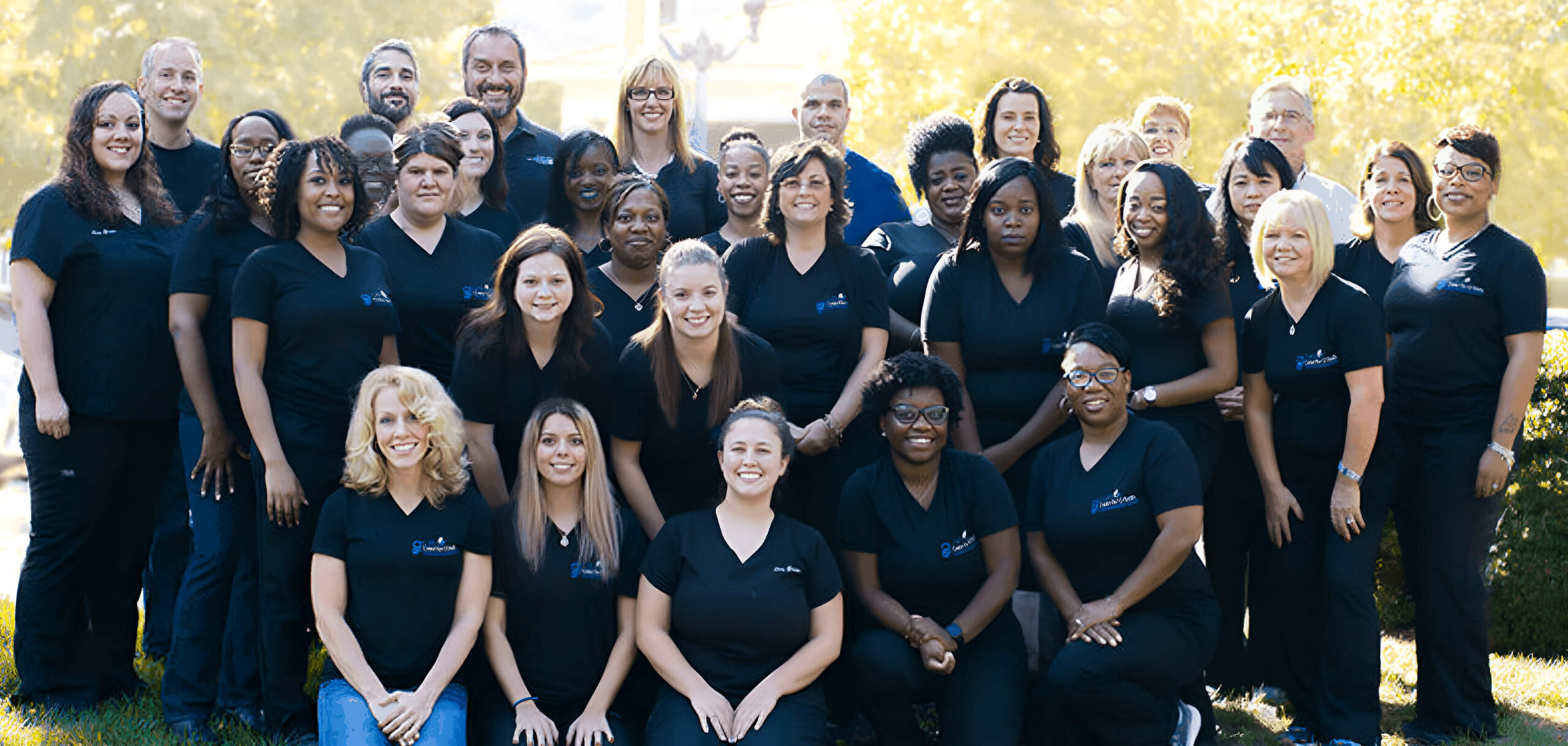
Welcome To Cary GI!
Cary Gastroenterology is the premier private GI practice providing professional digestive care to the Cary, Raleigh, and Triangle region for more than 30 years. We bring a cutting-edge, evidence-based approach to digestive healthcare. But, our main focus is our patients.
With seven board-certified gastroenterologists and hepatologists, with combined physician experience of more than 90 years, our dedication to our patients is like none other. As a patient with Cary Gastro, you are always personally evaluated and treated by your physician and a physician is available 24 hours a day, seven days a week to address your digestive needs.


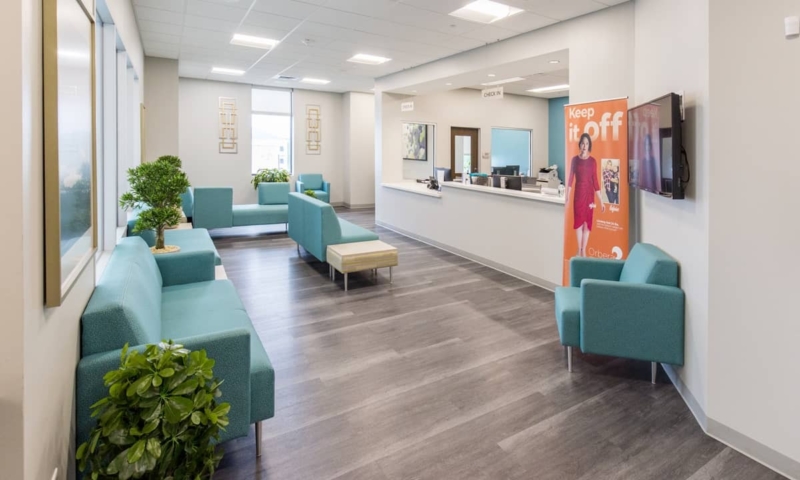
Our Mission
In 1986, Dr. Michael R. Pike began a legacy of gastroenterology care by founding Cary GI, the first private GI practice in the area. We exist to improve the health and longevity of our patients’ lives through high-quality, compassionate and dedicated digestive care.
At Cary GI, your best life is our legacy of commitment to care and prevention.
Why Choose Us?
- Convenience: Six locations to serve you.
- Availability: A physician is available by phone to our patients, 24 hours a day, seven days a week.
- Awareness: The Triangle’s only dedicated Women’s Center for GI Health, providing specific care for women’s health issues.
- Confidence: Hundreds of area physicians refer their patients for Cary’s GI care.
- Cutting Edge Digestive Care: Longer withdrawal times during a colonoscopy exceeding that of the national average.
Quality Rating - Exceeding the Standard
A sigmoidoscope is used to view the inside of the rectum and lower colon. A finger-sized thick tube with a camera at the end is inserted from the rectum, and images of the inner wall of the rectum and part of the colon can be seen on the monitor. It can be used to take a biopsy of the polyp or tumor and remove some polyps. However, a colonoscopy needs to be done to view the whole colon and remove all polyps or tumors. It is fairly safe but has a small risk of bowel tear, bleeding, and infection.
A colonoscope is similar to a sigmoidoscope but is longer and is used to examine the inner wall of the whole colon. It is inserted from the rectum, and the doctor can see the images of the entire colon on the monitor. Special surgical tools can be passed through the colonoscope to take a biopsy and remove polyps. Sedation is required. There is a small risk of bowel tears, bleeding, or infection after the procedure. It’s important to note this is the only colorectal prevention strategy offered.
This is the computed tomography scan of the colon. The person is asked to lie on a table of the CT scanner, which takes cross-sectional images of the colon. It is a non-invasive technique and does not require sedation. If any abnormalities are found, a colonoscopy needs to be done to remove the polyps or tumors.
A small tube is inserted in the rectum, and barium sulfate, a white chalky liquid, and air is pumped into the colon. The barium suspension lines the outer walls of the colon. X-ray images of the colon are then taken to reveal abnormalities on the inner wall of the colon. If any abnormalities are found, a colonoscopy needs to be done to remove the polyps or tumors.
These are done with the fecal sample and are totally safe. Fecal tests may not give confirmatory results but may suggest abnormalities in the gastrointestinal tract, warranting further tests. A colonoscopy needs to be repeated if results are positive, indicating the presence of cancerous growth in the colon. There are three types of fecal tests:
- Fecal occult blood tests detect blood in the feces that is not visible to normal eyes through a chemical reaction.
- Fecal immunochemical tests detect blood through a specific immunochemical reaction of a protein in the blood and can detect hidden blood.
- Stool DNA tests look for certain abnormal DNA genes in the cells shed from cancerous outgrowth or polyps in the stool sample.
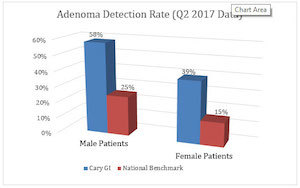
At Cary Gastroenterology, we track multiple endoscopic quality measures for all screening colonoscopies. The Adenoma Detection Rate (ADR) is the most important quality standard for screening colonoscopies. It is a calculation of the percentage of first-time screenings in patients at least 50 years of age during which a precancerous polyp (adenoma) is found. In other words, if a physician performs 10 screening colonoscopies, and finds an adenoma in three patients, the ADR is 30%. The current national standard ADR is 30% for male patients and 20% for female patients. Physicians with higher ADRs prevent more cancers.
The physicians at Cary Gastroenterology consistently have ADRs of more than double the national standard.
Here are some examples of exceptional, in-office treatment at Cary GI:
- In-office hemorrhoid treatment by non-surgical hemorrhoid banding treatment.
- In-office anorectal manometry for the comprehensive evaluation of fecal incontinence, chronic constipation, and defecatory disorders.
- Non-surgical treatment of anal fissures, including botulinum toxin injection.
- Breath testing for H. pylori infection, lactose intolerance, fructose intolerance, and a small bowel bacterial overgrowth.
- DNA based stool testing for the rapid and complete evaluation of infectious diarrhea.
- Treatment of hepatitis B and hepatitis C with the newest antiviral medications.
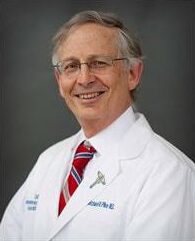
Michael R. Pike, M.D.
Our Founding Physician
Cary Gastroenterology is the legacy of Dr. Michael Pike, who was our founding partner in 1986. After 28 years of dedicated service Dr. Pike retired from practice in 2014. We are forever grateful for the solid foundation created by his vision to bring quality care and service to our community.

Michael G. Delissio, M.D.
Retired Physician, Founding Partner
After 31 years of providing exceptional care and service to our community, Dr. Michael Delissio retired in December 2018. We have the utmost appreciation for Dr. Delissio’s vision and leadership as one of the founding partners of Cary Gastroenterology. The lives that have been impacted by Dr. Delissio’s amazing care are too many to count.